
Canning Town is a fascinating area of East London with a rich and diverse history. From its origins as a marshland accessible only by boat or toll bridge to its industrial hub and multicultural community development, Canning Town has witnessed many changes and challenges over the centuries.
One of the most significant events that shaped Canning Town’s history was the opening of the Royal Victoria Dock in 1855. This was the first of London’s docks designed specifically for steamships, which were becoming increasingly important for trade and commerce. The dock attracted many businesses and workers, especially from the shipbuilding, chemical and sugar refining industries. The dock also brought in a wave of immigration from various parts of the world, creating a vibrant and diverse population.
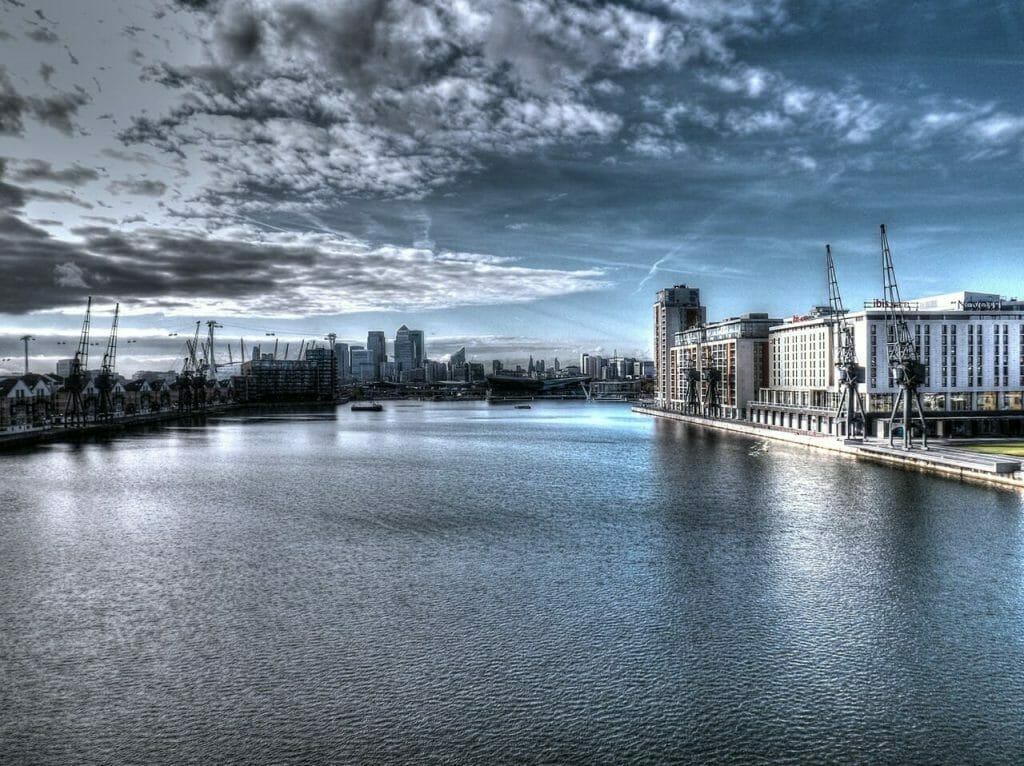
However, the rapid growth of Canning Town also came with problems. The area suffered from poor sanitation, overcrowding, disease, frequent accidents and explosions from dangerous industries. Canning Town became notorious for its slums and poverty and was often visited by social reformers and journalists who exposed the harsh realities of life there.
Canning Town is a district in the London Borough of Newham, East London. It is located north of the Royal Victoria Dock and has been described as the “Child of the Victoria Docks” as the timing and nature of its urbanisation was mainly due to the creation of the dock. The area was part of the ancient parish of West Ham, in the hundred of Becontree, and part of the historic county of Essex. It forms part of the London E16 postcode district.
Canning Town is a diverse and multicultural community with a population of over 42,000 people. The area has many businesses, shops, restaurants, and cultural attractions. Canning Town is also a central transport hub, with two London Underground stations (Canning Town and Custom House) and several bus routes.
The area is undergoing significant regeneration, with several new developments underway. These include the new ExCeL London exhibition centre, the Emirates Air Line cable car, and the Stratford Waterfront development. Canning Town is also home to the University of East London’s Docklands Campus.
Canning Town is a great place to live, work, and visit. It is a vibrant and diverse community with a lot to offer.
Despite these difficulties, Canning Town also had a strong sense of community and culture. The area was home to many social clubs, pubs, music halls and sports teams, including West Ham FC, which originated from the local ironworks. Canning Town also produced famous figures, such as boxer Terry Spinks, who won a gold medal at the 1956 Olympics, and singer David Essex, who grew up in nearby Plaistow.
Today, Canning Town is undergoing a significant regeneration programme to transform the area physically, socially and economically. The programme includes building new homes, creating jobs and improving transport links. The Royal Victoria Dock is now part of London’s Docklands, a modern business and leisure district that includes Canary Wharf and the Excel Centre.
Visit Canning Town in East London.
Canning Town is an area that has always adapted to changing times and circumstances. It is an area that offers visitors a glimpse into East London’s past, present and future.
Like large parts of the East End, Canning Town once had a strong industrial heritage, but the area was originally marshland. As such, for many centuries, the only way to reach Canning Town was to boat or pay a toll bridge. The location opened in the early 19th century when the Barking Road was built, bringing a more prominent bridge and more opportunities for connections with the rest of East London.
Before the reign of Queen Victoria, Canning Town had no real significance and only got its name in the Victorian period. It is probably named after Charles Canning. At the time, he was a relatively famous and popular character and had successfully managed the Indian Mutiny as Viceroy of India. Once the area started to be developed, it became a busy industrial and commercial hub.
For example, in 1846, the North London train line brought higher levels of industrialisation to this area of the East End. Originally built to transport supplies from the local docks, the Barking Road passenger station’s opening and more housing construction attracted more workers to the area’s chemical, shipbuilding and sugar refining factories. The football team that started in the local ironworks famously went on to become West Ham FC.
By 1855, Canning Town had a new Royal Victoria Dock. However, the local water supply and sewage system must be designed to cope with the increasing residents and businesses. Canning Town became infamous for its slum living conditions, high poverty levels and outbreaks of smallpox and cholera due to its inadequate sanitary conditions.
Canning Town Forges
Canning Town is a district in East London with a long and fascinating history of industry and innovation. One of the most prominent examples is the Thames Iron Works, a shipbuilding company from 1837 to 1912. The ironworks was located on the banks of the River Lea, near the Royal Victoria Dock, and produced some of the most advanced warships of its time. The ironworks also had a social and cultural impact on the area, employing thousands of workers from different backgrounds and countries and founding the West Ham football club.
The Thames Iron Works was not the only forge in Canning Town. The area was known for its metalworking and engineering industries, which attracted skilled artisans and entrepreneurs from all over Britain and Europe. Some of the notable forges in Canning Town were:
- The Canning Town Forge was established in 1857 by William Henry Piggott, a former manager of the Thames Iron Works. The forge specialised in making wrought iron pipes, fittings, valves, and boilers for gas and water supply. The forge also produced ornamental ironwork, such as railings, gates, and balconies.
- The Victoria Forge was founded in 1865 by John Penn and Sons, a leading marine engineering firm. The forge manufactured steam engines, boilers, propellers, and other machinery for ships and locomotives. The forge also supplied parts for the London Underground and the Channel Tunnel.
- The Britannia Forge was set up in 1872 by James Ashcroft, a former employee of the Thames Iron Works. The forge produced iron plates, bars, rods, and beams for shipbuilding and construction. The forge also made iron bridges, roofs, girders, and cranes.
These forges contributed to the economic growth and development of Canning Town and its reputation as a centre of excellence in metalworking and engineering. However, they also faced many challenges and difficulties over the years, such as competition from cheaper imports, labour disputes, environmental pollution, and technological changes. By the early 20th century, most forges had closed or moved away from Canning Town.
History of Canning Town’s New Docks

The increased docklands and shipping activities brought in a new influx of local and overseas workers who needed housing, including a significant community of West African, Caribbean and Asian immigrants. At one point, Canning Town was home to the most prominent black community in London, with over 100 families.
Many of the capital’s more dangerous industries were historically located in the East End, safely out of the way of the city of London and its more upmarket central areas. Charles Dickens described some of these industries as “offensive”.
This probably relates to the smells they created, as local businesses worked in gut spinning, varnish production and oil boiling at the time. Operating outside the city’s regulations also made it easier for companies to ignore housing and business regulations, sometimes leading to accidents.
Canning Town was no exception to this rule, and the area was affected by a significant accidental explosion at an ammunition factory in nearby Silvertown. Although this accident resulted in a relatively low loss of life, it damaged tens of thousands of local buildings around the East End.
Housing in Canning Town
By the 1930s, housing conditions in Canning Town were so dire that the local council started a program to clear the slums and provide better social conditions for residents. Many slum properties were torn down, and new houses, nurseries, medical clinics and even a lido opened.
The Second World War also severely affected the area and led to further redevelopment initiatives after the war. Much of the East End was a prime target for German bombers, and it is estimated that over 85% of the local housing stock was destroyed.
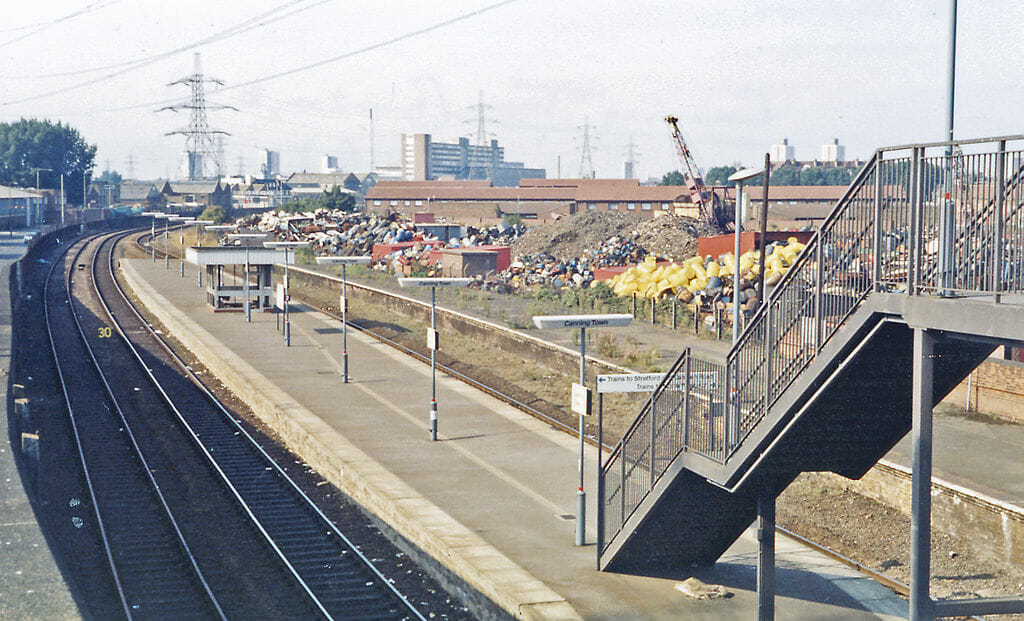
Canning Town was also the scene of one of the worst bombing events in the war, although a government cover-up at the time hid the full extent of the incident. In September 1940, residents were sheltering in the basement of South Hallsville School during an air raid. They were staying in the school because they had been evacuated from their homes.
The school suffered from a direct hit burying all the sheltering locals under piles of rubble. Reports at the time indicated that around 70 people died in the incident, but it is now believed that close to 600 people died on the site making this the worst civilian casualty rate in a bombing raid during the war.
Modern History: Canning Town Redevelopment
Due to redevelopment programs and damage sustained in the war, much of the housing in and around Canning Town is relatively modern; most rebuilding took the form of new council estates, including several high-rise tower blocks, which were popular at the time.
One high-rise block became well-known in the 1960s for all the wrong reasons when a gas explosion caused an entire corner of the block to collapse. It and its surrounding high-rises were demolished to make way for safer, smaller houses, and the lessons learned from this accident changed how high-rises were built. Canning Town remains a relatively deprived area and is undergoing continuing redevelopment.